
How to Infuse Navratri Rituals with Kleem Energy through mindful chanting, devotion, meditation, positive intentions, and visualization to attract love, harmony, confidence, emotional balance, and spiritual growth. Navratri is a sacred nine-night festival dedicated to the divine feminine energy, celebrated with devotion, prayer, fasting, meditation, and spiritual practices. For many practitioners, Navratri is also considered an ideal period for setting positive intentions, strengthening inner confidence, and creating a peaceful environment for personal transformation. One traditional seed mantra associated with attraction, love, devotion, and harmonious energy is “Kleem” (क्लीं).
Kleem is often described in spiritual traditions as a bija mantra, or seed sound, connected with divine attraction and loving energy. When incorporated respectfully into Navratri practices, it can become a focus for meditation and intention-setting rather than a means of controlling another person.
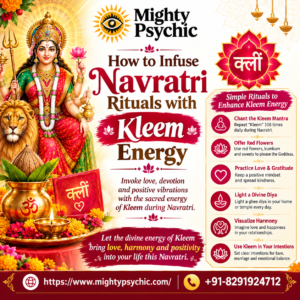
Understanding Kleem Energy
The sound Kleem is traditionally associated with the energy of love, attraction, compassion, beauty, and emotional harmony. In devotional practice, repeating a mantra can help bring the mind into a more focused and peaceful state.
The purpose of working with Kleem during Navratri can therefore be approached as an opportunity to cultivate qualities such as:
- Love and compassion
- Emotional balance
- Self-confidence
- Positive communication
- Harmony in relationships
- Devotion and gratitude
- Clarity of intention
Rather than focusing exclusively on obtaining a particular outcome, practitioners can use the mantra as a spiritual reminder to become more loving, calm, patient, and receptive.
Why Navratri Is Considered Significant
Navratri is traditionally devoted to the worship of different forms of Goddess Durga. Each day carries its own devotional significance, and many people use the nine-night period for prayer, meditation, fasting, charitable activities, and reflection.
Because the festival emphasizes Shakti, or divine feminine energy, devotees may feel inspired to focus on qualities such as courage, nurturing, wisdom, strength, and transformation.
Adding Kleem meditation to this devotional atmosphere can create a simple daily practice centered on love and positive intention.
Create a Peaceful Sacred Space
Before beginning your ritual, prepare a clean and peaceful space. You may place an image or murti of the Goddess on a clean altar and decorate the area with flowers, a diya, or other traditional devotional items.
Keep the space uncluttered. The purpose is to create an environment where you can sit comfortably and concentrate without unnecessary distractions.
If you normally follow a particular family or regional Navratri tradition, continue those practices first. Kleem meditation can be treated as an additional personal spiritual practice rather than a replacement for traditional worship.
Begin with Grounding
Sit comfortably and take several slow breaths. Close your eyes if that feels comfortable and allow your attention to settle.
Instead of immediately asking for a particular romantic outcome, begin by setting a positive intention.
You might silently affirm:
“May I cultivate love, understanding, compassion, confidence, and harmony in my relationships.”
This approach keeps the practice focused on personal growth and healthy relationships.
Chanting Kleem During Navratri
After grounding yourself, you may softly repeat “Kleem” as a meditation sound.
Some practitioners use a mala to maintain concentration and count repetitions. If you choose to use one, keep your practice comfortable and consistent rather than becoming overly concerned with a particular number of repetitions.
Repeat the sound slowly and mindfully. Allow your breathing to remain natural.
The important element is attention and intention, not simply repeating a sound mechanically.
You can visualize a gentle feeling of warmth and compassion spreading through your heart while chanting. Let the meditation encourage emotional calmness rather than attachment to a specific person.
Combine Kleem with Devi Devotion
A meaningful way to incorporate Kleem into Navratri is to place the meditation after your regular Devi prayer.
For example, your routine might include:
- Cleaning the prayer area.
- Lighting a diya safely.
- Offering flowers or other traditional offerings.
- Performing your customary Devi prayer.
- Sitting quietly for a few minutes.
- Practicing mindful Kleem chanting.
- Ending with gratitude.
This structure keeps the practice connected to devotion while giving you time for personal reflection.
Focus on Healthy Love
If your intention involves romantic relationships, use the practice to develop qualities that support a healthy partnership.
Instead of concentrating on forcing someone to return, consider intentions such as:
- “May communication improve.”
- “May misunderstandings be resolved peacefully.”
- “May I recognize relationships that are healthy for me.”
- “May I become more patient and understanding.”
- “May love enter my life in a positive and respectful way.”
This distinction is important. Spiritual practices can be used for reflection, prayer, and intention-setting, but they should not be treated as a guaranteed method for controlling another person’s thoughts, emotions, or decisions.
Use Visualization Carefully
Visualization can complement mantra meditation. During your practice, imagine yourself experiencing qualities such as peace, confidence, affection, and emotional stability.
If you are seeking a relationship, visualize yourself communicating openly and respectfully with a compatible partner.
If you are experiencing relationship difficulties, visualize peaceful communication and mutual understanding rather than attempting to dominate or control another individual.
This makes the practice more constructive and encourages you to focus on the type of relationship you genuinely want to build.
Keep a Navratri Journal
A spiritual journal can make the nine-day practice more meaningful.
After meditation, write down a few thoughts:
- What emotion did I experience today?
- What am I grateful for?
- What relationship pattern do I want to improve?
- Where can I communicate more honestly?
- What positive quality do I want to develop?
Over nine days, these reflections can reveal recurring emotions and encourage greater self-awareness.
Incorporate Acts of Kindness
Mantra practice can be complemented by practical expressions of love and compassion.
During Navratri, consider helping someone, supporting a family member, practicing generosity, or simply communicating with greater patience.
Spirituality becomes more meaningful when inner intention is reflected in everyday behavior.
Kleem meditation can remind you of love, but healthy relationships also require trust, communication, boundaries, respect, and mutual choice.
Maintain a Simple Nine-Day Routine
You do not need to create an elaborate ritual. A simple routine performed consistently can be easier to maintain.
For example:
Day 1: Set your intention and begin with gratitude.
Day 2: Focus on self-love and confidence.
Day 3: Reflect on communication.
Day 4: Release unnecessary resentment.
Day 5: Practice compassion.
Day 6: Reflect on healthy relationship boundaries.
Day 7: Express gratitude for supportive people.
Day 8: Visualize harmony and emotional stability.
Day 9: Conclude with prayer, gratitude, and a commitment to positive action.
This approach allows the practice to develop gradually throughout Navratri.
Create a Positive Mindset
One of the most valuable aspects of any spiritual practice is the opportunity to slow down and become conscious of your thoughts.
If you are worried about a relationship, avoid allowing the ritual to become a source of anxiety. You do not need to repeat a mantra continuously because you are afraid something will go wrong.
Instead, let the practice become a peaceful daily pause.
After your meditation, return to real-world actions. If there is a relationship problem, consider having an honest conversation, giving the other person appropriate space, seeking constructive advice, or working on your own emotional wellbeing.
Respect Traditional Guidance
Mantra practices can vary across traditions, lineages, and teachers. If you already follow a particular spiritual tradition, it is wise to respect its established methods and pronunciation guidance.
For more formal tantric or mantra practices, learning from a knowledgeable and reputable teacher can be valuable.
Navratri should ultimately remain a period of devotion, reflection, and spiritual renewal rather than becoming solely focused on romantic results.
Conclusion
Infusing Navratri rituals with Kleem energy can be approached as a mindful spiritual practice centered on love, compassion, attraction, confidence, and emotional harmony. By combining devotional prayer, meditation, positive intentions, visualization, journaling, and acts of kindness, practitioners can use the nine nights as an opportunity for inner transformation. Love Problem Solution in UK with Mighty Psychic offers spiritual guidance for relationship challenges, misunderstandings, emotional distance, reconciliation, and restoring love, peace, harmony, trust, and happiness.
The most constructive intention is not to control another person’s feelings but to cultivate the qualities that support healthy and fulfilling relationships. Let Kleem serve as a reminder of love and harmony while your everyday actions—respect, honesty, patience, communication, and compassion—bring those values into real life.
Navratri offers a beautiful opportunity to reconnect with devotion and personal strength. When practiced with sincerity and a positive mindset, a simple Kleem meditation can become one small part of a meaningful nine-day journey toward greater emotional clarity, confidence, and harmony.