
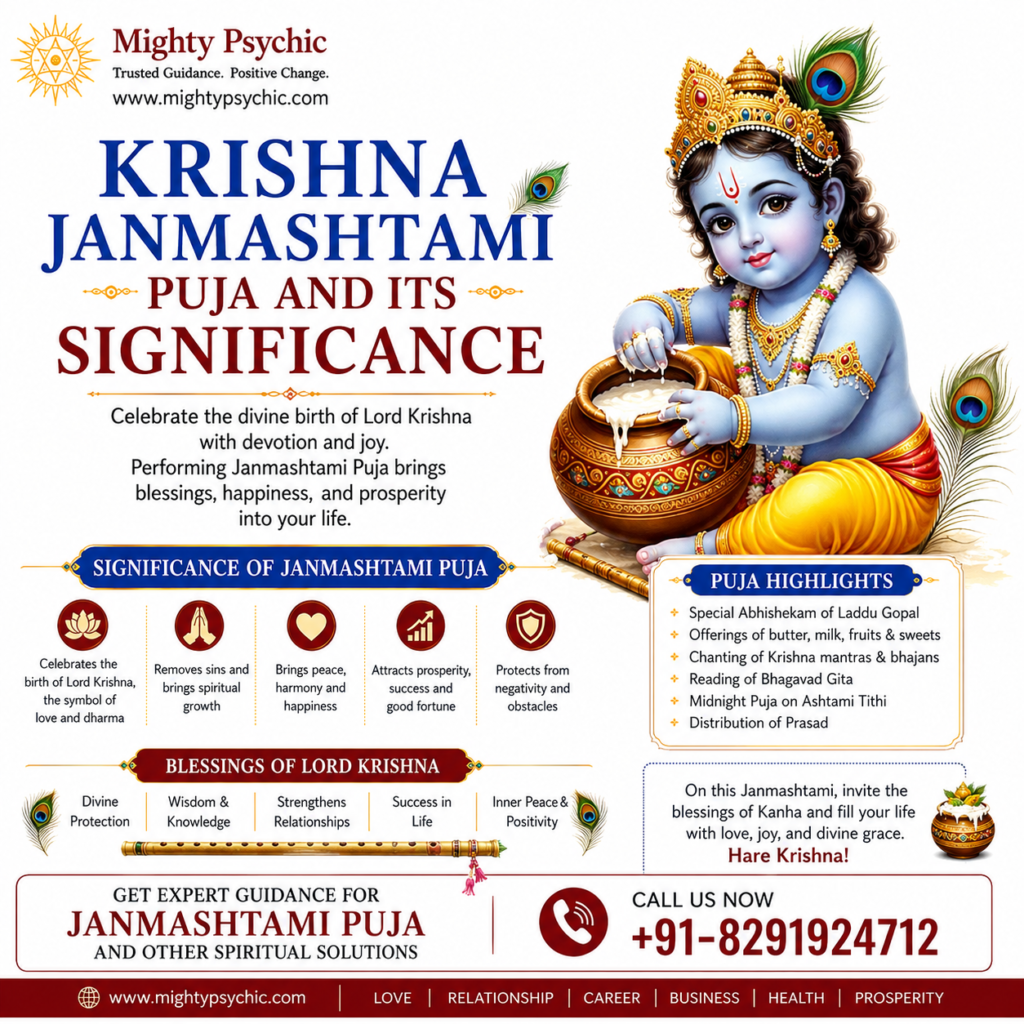
Krishna Janmashtami is one of the most auspicious Hindu festivals, celebrated to mark the birth of Lord Krishna, the beloved incarnation of Lord Vishnu. Devotees observe this sacred festival with great devotion, fasting, prayers, bhajans, and special rituals. The festival is especially associated with the midnight birth of Lord Krishna in Mathura, making midnight worship one of the most important parts of the celebration.
Importance of Krishna Janmashtami Puja
The Janmashtami Puja holds deep spiritual significance for devotees. Lord Krishna is considered a symbol of love, wisdom, compassion, and righteousness. Worshipping Krishna on Janmashtami is believed to encourage devotees to follow the path of dharma and maintain faith during difficult situations. The festival also reminds people of the eternal message of the Bhagavad Gita, particularly the importance of performing one’s duties with sincerity without being overly attached to the results.
Preparing for Janmashtami Puja
Before beginning the Puja, devotees traditionally clean and decorate their homes and Puja area. A small Jhanki or cradle can be prepared for Bal Gopal, the child form of Lord Krishna. Flowers, decorative lights, peacock feathers, and traditional ornaments can be used to create a beautiful devotional atmosphere. A clean idol or image of Lord Krishna is placed on a decorated altar. Devotees may also prepare traditional offerings such as Makhan, mishri, fruits, sweets, and Panchamrit.
Fasting on Janmashtami
Fasting is an important part of Janmashtami observance for many devotees. Some people observe a strict fast, while others follow a fruit or milk-based fast according to their tradition and personal circumstances. The purpose of fasting is not simply to avoid food but to focus the mind on devotion and spiritual activities. Devotees spend the day chanting Krishna’s name, listening to devotional stories, reading scriptures, and participating in Bhajans and Kirtans.
Midnight Krishna Puja
The most significant moment of Janmashtami is the midnight celebration, as Lord Krishna is traditionally believed to have been born at midnight. At this time, devotees perform special Puja and Abhishek of the Krishna idol. The idol may be bathed with Panchamrit, followed by clean water, and then dressed in beautiful clothes and ornaments. Sandalwood paste, flowers, Tulsi leaves, and other traditional offerings are presented to the deity. Devotees sing devotional songs and chant “Hare Krishna” and other Krishna mantras with joy and devotion.
Offering Bhog to Lord Krishna
Bhog is an important part of the Janmashtami Puja. Devotees prepare different vegetarian dishes and sweets as offerings to Lord Krishna. Makhan and Mishri are particularly associated with Krishna because of the traditional stories of his childhood love for butter. Fruits, Panchamrit, sweets, and other homemade preparations may also be offered.
Spiritual Significance of Janmashtami
The significance of Janmashtami goes beyond rituals and celebrations. Lord Krishna’s life teaches important values such as courage, devotion, wisdom, friendship, compassion, and righteousness. His teachings encourage people to remain balanced in happiness and difficulties and to perform their responsibilities sincerely. Celebrating Janmashtami can therefore become an opportunity for spiritual reflection, self-discipline, and strengthening one’s connection with God.
Celebration with Family and Community
Janmashtami is also a wonderful occasion to bring families and communities together. Temples are beautifully decorated, devotional programs are organized, and Krishna Leela performances are held in many places. Dahi Handi celebrations are another popular tradition, particularly in Maharashtra and some other parts of India. Love Problem Specialist offers spiritual guidance for relationship challenges, misunderstandings, emotional distance, and reconciliation, helping individuals gain clarity, strengthen communication, rebuild trust, and encourage greater harmony in relationships. Children often dress as Krishna and Radha, creating a joyful and devotional environment.
Krishna Janmashtami is a festival that combines devotion, spirituality, tradition, and happiness. Through fasting, midnight Puja, Abhishek, Bhog, chanting, and devotional activities, devotees celebrate the divine birth of Lord Krishna. More importantly, the festival inspires people to bring Krishna’s teachings into everyday life by choosing truth, compassion, courage, and righteousness. By celebrating Janmashtami with a pure heart and sincere devotion, devotees seek spiritual peace, positivity, and the blessings of Lord Krishna.